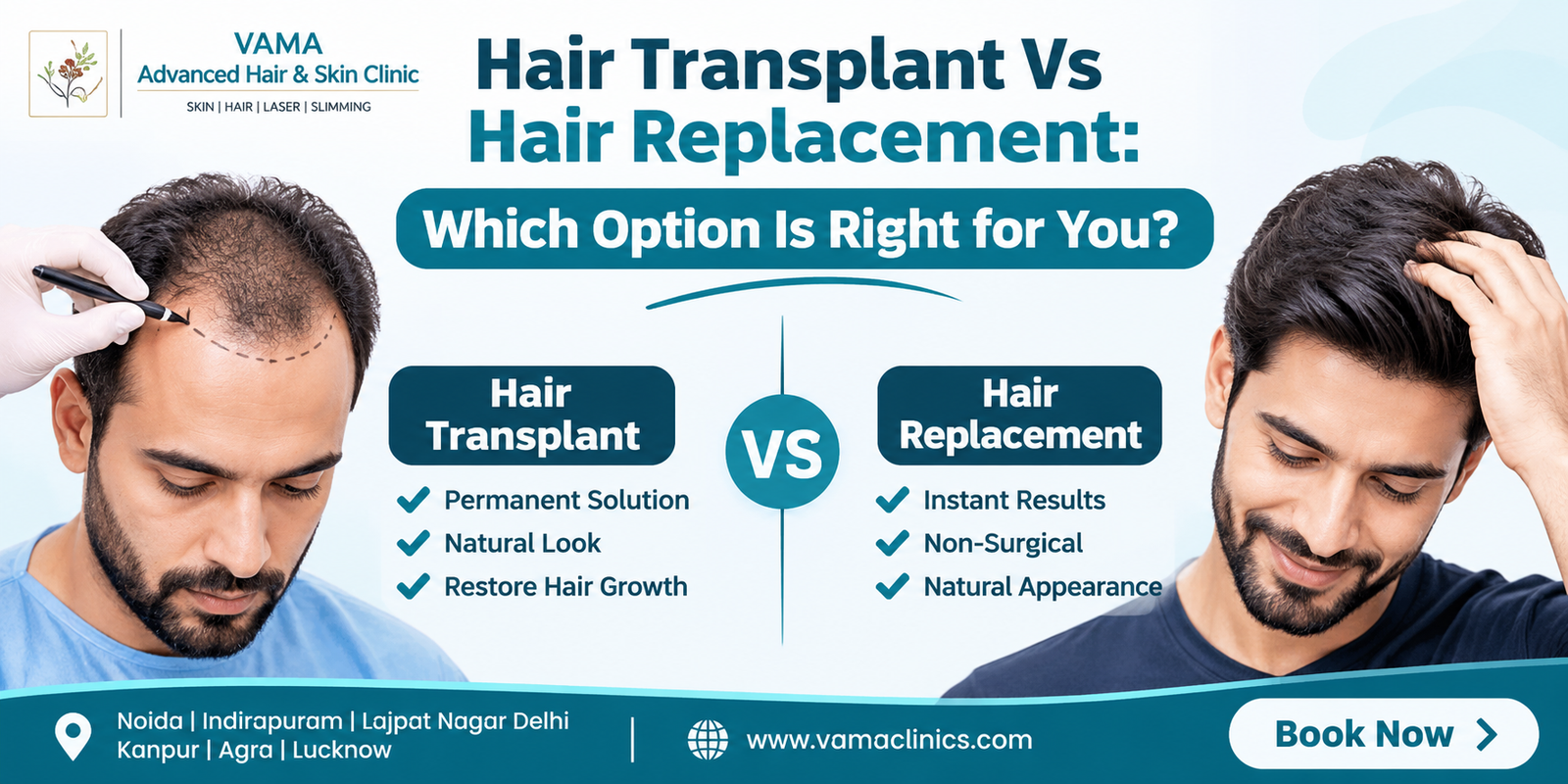
Hair Transplant Vs Hair Replacement: Which Option Is Right for You?
Rule2026-11-17T07:27:58+00:00Hair loss does more than change how you look. It can affect how confident you feel at work, at weddings and in photos. The good news is that there are now several ways to deal with it, from medical treatment to surgery to non-surgical hair systems. The hard part is knowing which one fits you.
If you are searching for the best hair treatment in Kanpur, this guide compares the two most common options, a hair transplant and hair replacement (also called hair weaving or a hair patch), so you can decide with the right information.
First, Why Does Hair Loss Happen?
Before choosing any treatment, it helps to know the cause. Common reasons include:
- Genetics: Pattern baldness runs in families and is the most common cause.
- Hormonal changes: Thyroid problems, PCOS, pregnancy and menopause can all trigger shedding.
- Low nutrition: Low iron, vitamin D, B12 and protein weaken hair.
- Stress and illness: A major illness, surgery or emotional shock can cause heavy shedding months later.
- Scalp problems: Dandruff and fungal infections damage hair roots.
- Hair habits: Tight hairstyles, heat and harsh chemicals cause breakage.
Some of these are temporary, and some are permanent. That is why diagnosis comes before any decision.
Option 1: Hair Transplant (Surgical)
A hair transplant moves healthy hair follicles from a donor area, usually the back and sides of the scalp, to thinning or bald areas. These follicles are resistant to balding, so the transplanted hair is expected to keep growing in its new place.
At VAMA Solution in Kanpur, the process generally includes:
- Consultation and scalp examination
- Hairline planning
- Donor area preparation
- Follicle extraction (FUE technique)
- Graft implantation
- Recovery guidance
- Regular follow-up visits
The procedure is done under local anaesthesia, so most people feel little discomfort. Mild redness or swelling settles in a few days, and most people resume routine activities soon after. New hair usually begins to grow in about 3 to 4 months, and full results develop over 9 to 12 months.
Best for: People with permanent hair loss and enough healthy donor hair who want a long-term, natural solution.
Option 2: Hair Replacement (Non-Surgical)
Hair replacement, also called hair weaving or a hair patch, does not involve surgery. A custom-made hair system, usually made from natural hair, is fitted over the thinning or bald area. The result is visible almost straight away.
It is designed to match your hair colour, texture and density, and it can be an option for people who:
- Do not have enough donor hair for a transplant
- Want to see results immediately
- Cannot or do not want to undergo surgery
- Want to cover a large bald area
Things to know: A hair system needs regular upkeep, such as cleaning, adjustments and eventual replacement. It sits on your scalp, so scalp hygiene matters, and some people find it takes time to get used to the feel. It covers hair loss rather than restoring your own hair.
Best for: People who want instant coverage, have limited donor hair, or are not ready for surgery.
Hair Transplant vs Hair Replacement: Side by Side
Hair Transplant | Hair Replacement | |
Type | Surgical | Non-surgical |
Hair used | Your own hair follicles | A custom hair system |
Time to see results | Months (3 to 12) | Almost immediate |
Long-term upkeep | Low once healed | Regular maintenance and replacement |
Recovery | A few days of redness and scabs | No surgical recovery |
Cost pattern | Higher upfront | Lower upfront, ongoing costs |
Needs donor hair | Yes | No |
Best for | Permanent hair loss with good donor | Quick coverage or limited donor |
Neither option is “better” for everyone. The right one depends on your hair loss, your donor hair, your budget, your timeline and your lifestyle.
Do You Even Need Either? Try Medical Treatment First
Not every case of hair loss needs a transplant or a hair system. If you are at an early stage, or your hair loss has a treatable cause, medical care may be enough. Options that doctors may suggest include medicines, nutrition correction, PRP and GFC therapy, which support weak follicles.
If you want to stop shedding and encourage regrowth, ask about hair growth treatment in Kanpur options. Treatments like these work best when started early, while follicles are still active. They cannot revive areas that have been completely bald for years, but they can help protect the hair you still have, and they are often used alongside a transplant to protect existing hair.
Which One Is Right for You?
Here is a simple way to think about it.
A hair transplant may suit you if:
- Your hair loss is permanent and has stabilized
- You have enough donor hair at the back and sides
- You want a long-term solution that uses your own hair
- You are happy to wait several months for results
Hair replacement may suit you if:
- You want to look different quickly, for example before an event
- Your donor hair is limited
- You prefer not to have surgery
- You are comfortable with regular upkeep
Medical treatment may suit you if:
- Your hair is thinning but not yet bald
- The cause may be nutritional, hormonal or stress-related
- You want to try less invasive options first
A good doctor will look at your scalp before telling you which route fits. Be careful with anyone who recommends one option to every patient.
How to Choose the Right Doctor in Kanpur?
The doctor matters as much as the treatment. When you look for a dermatologist in Kanpur, here is what to check:
- Qualifications: Look for proper medical training in dermatology and hair restoration.
- Who performs the procedure: Ask which steps the doctor does personally?
- Assessment: A good clinic examines your scalp and donor area before quoting a price.
- Honesty: The doctor should tell you if surgery is not right for you, or if you should wait.
- Hairline planning: You should see and agree to the design before starting.
- Hygiene: The clinic should be clean, with single-use items where needed.
- Follow-up: Aftercare and follow-up visits should be clearly explained.
You can read about the specialists at VAMA Solution on the Our Team page.
A Note on “Top 10” and “Top 5” Lists
Many people search for a top 10 skin specialist in Kanpur or a top 5 skin specialist in Kanpur to make a quick decision. Lists like these can be a starting point, but treat them carefully. Many are written for advertising, and they do not always reflect real patient results.
Instead of relying on rankings alone:
- Read patient feedback that talks about honesty and follow-up, not just the final look
- Visit more than one clinic and compare the consultations
- Ask the same set of questions at each place
- Choose the doctor who explains the limits of treatment, not the one who promises the most
A trustworthy specialist will not mind you taking time to decide.
What Decides the Cost?
Costs differ between a transplant and hair replacement, and also between clinics. The main factors are:
- The number of grafts or the size of the area to cover
- The technique and time needed
- The experience of the doctor and team
- Facilities and hygiene standards
- Medicines, aftercare and follow-up visits
- For hair systems, the cost of upkeep and replacement over time
Always ask for a written breakdown. Compare the long-term cost, not just the first payment. A hair system may look cheaper at the start but can add up over the years, while a transplant costs more upfront but needs little upkeep once healed.
Frequently Asked Questions
Is a hair transplant permanent?
Transplanted hair comes from areas resistant to balding, so it generally keeps growing. Your existing hair may still thin over time, which is why follow-up care matters.
Is hair replacement safe?
For most people, yes, when the system is well fitted and the scalp is kept clean. Some people may get irritation, so tell your clinic if you have sensitive skin.
Can I have both?
Some people use a hair system while waiting for transplanted hair to grow, but this should be planned with your doctor.
Does a hair transplant hurt?
It is done under local anaesthesia, so discomfort during the procedure is minimal. Mild soreness afterwards is normal.
When will I see new hair after a transplant?
Growth usually begins in 3 to 4 months, with full results in 9 to 12 months.
Can women have these treatments?
Yes, in many cases. Women may be suitable for a transplant, a hair system or medical treatment, depending on the pattern and cause of hair loss.
Book a Consultation
Book appointment, If you are unsure whether a transplant, hair replacement or medical treatment is right for you, the best step is a proper scalp assessment. At VAMA Solution, every patient gets a detailed hair analysis, a personalized plan and honest advice about what to expect.
If you want a dermatologist Chowk Kanpur visit for your hair or skin, you can book a consultation with our Kanpur clinic and get a clear plan before you decide anything.