How Long Does It Take to See Results from Pigmentation Treatment?
Rule2026-11-16T06:01:49+00:00Most people begin to notice early changes in pigmentation after a few weeks of consistent treatment, but visible improvement usually takes several weeks to a few months. Surface pigmentation tends to fade faster, while deeper pigmentation and melasma take longer and may need ongoing maintenance. Your exact timeline depends on the type of pigmentation, its depth, your skin type and how well you protect your skin from the sun.
If you are considering Pigmentation Treatment in Kanpur, knowing what to expect and when can help you stay patient and consistent. This guide explains realistic timelines for different types of pigmentation and treatments, what slows results down and how to get the most from your plan.
Why Pigmentation Treatment Is Gradual
Pigmentation happens when the skin produces or distributes too much melanin in certain areas. Treatment works by calming that overproduction, exfoliating pigmented skin cells or breaking down pigment so the body can clear it. None of these happen overnight.
Skin also renews itself slowly. The outer layer of the skin takes roughly a month to renew, and pigment that sits deeper takes much longer to fade. That is why a realistic plan measures progress in weeks and months, not days.
Typical Timelines by Type of Pigmentation
Different types of pigmentation respond at different speeds. The ranges below are general guides, not guarantees.
Sun Tan and Sun Spots
Surface-level sun damage often responds the fastest. With sun protection and suitable treatment, many people see lightening within a few weeks, with further improvement over the following months.
Post-Acne Marks
Dark marks left by pimples can fade slowly even on their own, often over several months. Treatment can help speed this up, and early improvement may be visible in a few weeks, with clearer results over several months.
Post-Inflammatory Pigmentation
Pigmentation that follows irritation, injury or skin inflammation behaves similarly to post-acne marks. How long it takes depends on how deep the pigment sits and whether the original trigger has settled.
Melasma
Melasma is the slowest and most unpredictable. It is influenced by hormones and sun exposure, and it can improve with treatment and then return. Improvement is usually gradual over months, and long-term maintenance and strict sun protection are essential. This is why anyone searching for Skin Pigmentation Treatment in Kanpur for melasma should expect a longer, more careful plan.
Freckles and Age Spots
These can respond well to targeted treatments, but they may reappear with sun exposure.
Timelines by Treatment Type
The VAMA approach combines different options, and your dermatologist may recommend one or a combination of them. Here is how each typically fits into the timeline.
Prescription Skincare and Topical
Medical-grade creams and serums are usually used daily. Because they work gradually, it can take several weeks of regular use before you see a difference, and a few months for clearer results. Consistency matters more than strength.
Chemical Peels
Peels are usually done as a series of sessions spaced a few weeks apart. You may notice fresher, brighter skin after the first one or two sessions, while pigmentation tends to fade progressively over the full course.
Laser-Based Treatments
Laser treatments target pigment in a controlled way. They are also done in a series, spaced weeks apart. Some people notice lightening after the first sessions, but the best results usually appear after the full recommended course. Settings must be chosen carefully for your skin tone.
Micro-Needling and Skin Rejuvenation
These improve tone and texture over time and often support other treatments. Results build gradually across sessions.
Sun Protection
This is not a treatment you can skip. Without daily sunscreen, pigmentation can darken again and slow or undo your progress.
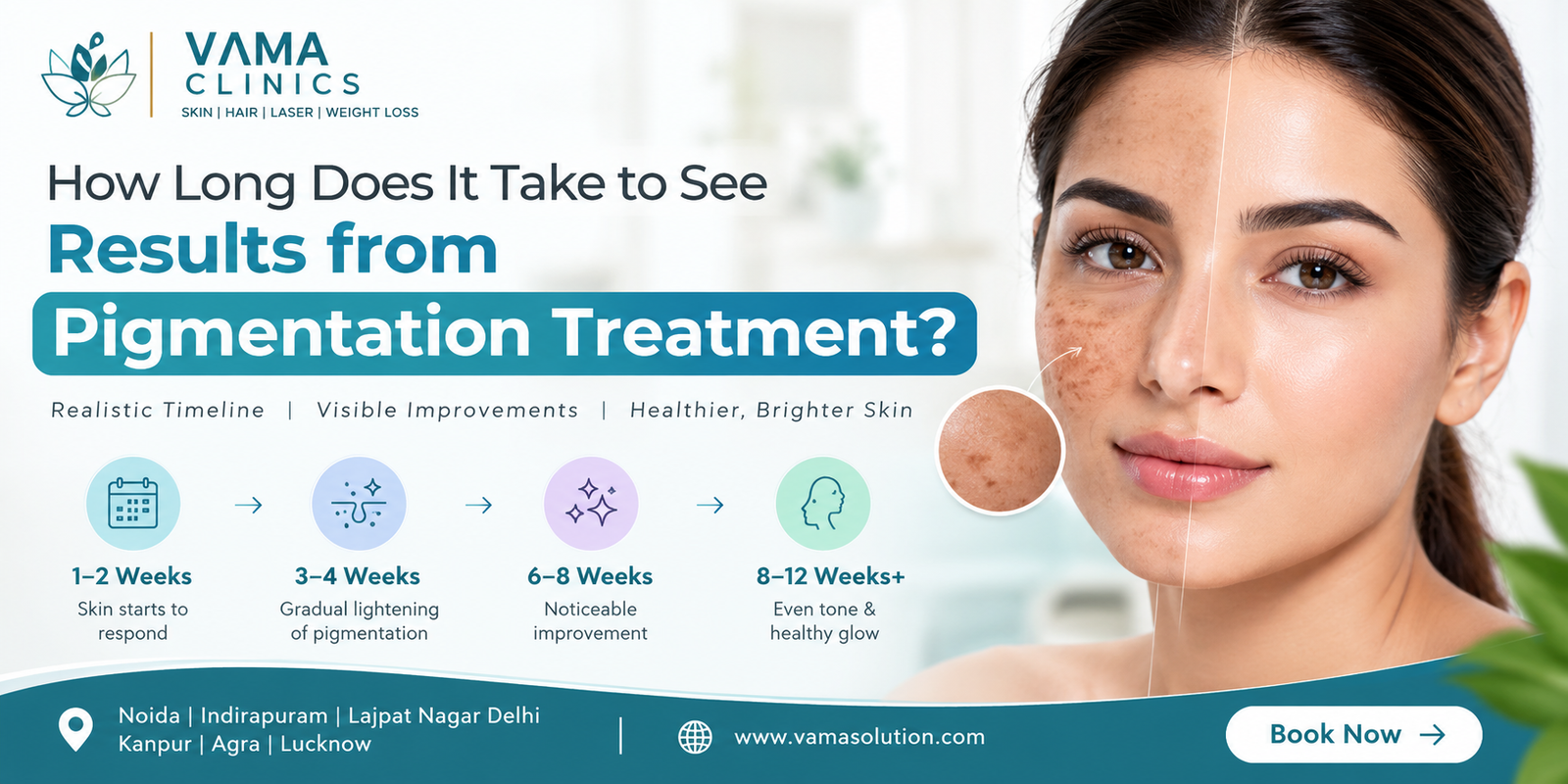
A Sample Timeline: What You Might Notice and When
Everyone is different, but this gives a rough idea of how progress often unfolds.
- Week 1–2: Your doctor assesses your skin and starts your plan. Some peels or lasers may cause mild redness, flaking or temporary darkening. This is part of the process.
- Week 3–6: Skin may look brighter and fresher. Early lightening of surface pigmentation may begin.
- Month 2–3: Visible improvement is more likely, especially in surface pigmentation and post-acne marks.
- Month 3–6: Clearer, more even tone for many people with consistent treatment. Deeper pigmentation and melisma may still be improving.
- After the main course: Maintenance with skincare and sun protection helps keep the results.
The number of sessions varies with the type and depth of pigmentation, so your doctor will give you a schedule after assessing your skin.
What Can Slow Down Your Results?
If you feel your progress is slow, one of these factors may be the reason:
- Sun exposure: The biggest cause of setbacks. UV and visible light can stimulate pigment production.
- Skipping sessions or products: Gaps in treatment slow progress.
- Hormonal changes: Pregnancy, contraceptive pills and hormonal conditions can trigger or worsen melasma.
- Picking at pimples or skin: This can cause new post-inflammatory pigmentation.
- Irritating products: Harsh scrubs, strong acids or home remedies can inflame skin and darken pigmentation.
- Deeper pigmentation: Pigment in lower layers takes longer to fade.
- Unrealistic expectations: Expecting overnight results can lead to frustration and switching treatments too early.
How to Get the Best and Fastest Results?
- Get a proper diagnosis first. The right treatment depends on the cause.
- Use sunscreen every day. A broad-spectrum sunscreen with SPF 30 or higher is commonly advised, reapplied through the day.
- Follow your plan consistently. Attend all sessions and use your prescribed products as directed.
- Avoid picking, scrubbing or random products.
- Be patient. Take photos in the same light every few weeks to track real progress.
- Attend follow-ups. Your doctor can adjust the plan if your skin responds slowly.
Choosing a Clinic in Kanpur
When you search for the Best Pigmentation Treatment in Kanpur, remember that the best option is not the fastest promise but the plan that fits your skin. Look for a clinic that:
- Diagnoses the cause of your pigmentation before treating it
- Chooses settings suited to Indian skin tones
- Gives you a clear schedule with realistic expectations
- Offers aftercare and follow-up
- Is honest about the chance of recurrence
A good Pigmentation Treatment Clinic in Kanpur will explain how long you can realistically expect your treatment to take before you begin, and what each stage may look like.
Is It Permanent?
Pigmentation can often be reduced significantly, but conditions like melisma may return with sun exposure or hormonal changes. Daily sunscreen and maintenance care are essential, and results vary from person to person. This is why dermatologists speak about managing pigmentation over time, not removing it once and forever. If you are exploring Pigmentation Removal Treatment in Kanpur, be cautious of any clinic that promises complete or permanent removal.
When to See a Dermatologist
Book a consultation if:
- Dark patches are spreading or changing in shape or color
- A mole or spot is growing, bleeding or looks irregular
- Pigmentation has not improved with simple measures
- Your skin becomes red, painful or irritated after using a product
- You are unsure what type of pigmentation you have
Changes in a mole or spot should always be checked by a doctor.
Frequently Asked Questions
How long does it take to see results from pigmentation treatment?
Many people see early changes within a few weeks, with clearer improvement over several weeks to months. The exact timeline depends on the type and depth of pigmentation.
How many sessions will I need?
Most people need a series of sessions, depending on the type and depth of pigmentation. Your doctor will suggest a schedule after assessing your skin.
Why is my melisma taking so long to improve?
Melisma is influenced by hormones and sun exposure and is slower to respond. It usually needs a combination of treatment, sun protection and long-term maintenance.
Can pigmentation come back after treatment?
Yes. Sun exposure, hormonal changes and inflammation can trigger it again, so aftercare and sun protection are important.
Is pigmentation treatment safe for Indian skin?
Yes, when it is planned and performed by experienced specialists who choose the right settings and provide proper aftercare.
Does sunscreen really make a difference?
Yes. Sun protection is one of the most important steps in keeping pigmentation from returning.
The Bottom Line
Pigmentation treatment is a gradual process. Expect early changes in a few weeks, visible improvement over a few months and ongoing care to keep your results. The most important things you can do are get a proper diagnosis, stay consistent, protect your skin from the sun and be patient.
If you are ready to start, book a free consultation to get an honest assessment and a realistic timeline for your skin. Learn more on the VAMA pigmentation treatment page, or call +91 92897 58206.