Hair Transplant vs PRP: Which Is Better for Hair Loss?

Hair Transplant vs PRP: Which Is Better for Your Hair Loss?

When hair starts thinning, two treatments come up in almost every conversation: a hair transplant and PRP. One is a surgical procedure and the other is a non-surgical therapy, and people often ask which one is better. The honest answer is that neither is better for everyone. The right choice depends on how much hair you have lost, whether your follicles are still active and what you want from treatment. If you are weighing both at a Hair Transplant clinic in Lajpat Nagar, this guide explains how each works, where each shines and how to decide. What Is a Hair Transplant? A hair transplant is a surgical procedure that moves healthy hair follicles from a donor area, usually the back or sides of the scalp, to thinning or bald areas. These donor follicles are generally resistant to the hormone that causes pattern baldness, so transplanted hair tends to last for many years. Because it uses your own follicles, the new hair grows like natural hair once it settles in. It works best when hair loss is permanent, the pattern is reasonably stable and there is enough healthy donor hair. A transplant restores hair in areas that have lost it, which is something non-surgical treatments cannot do. What Is PRP Hair Treatment? Platelet-rich plasma, or PRP, is a non-surgical therapy. A small sample of your own blood is drawn and spun in a centrifuge to separate the platelet-rich plasma, which is then micro-injected into the scalp. Platelets carry growth factors that play a role in healing and tissue repair, and the aim is to support weakened follicles and improve hair density. PRP works on follicles that are still alive. It strengthens what you have, but it cannot create hair where follicles have been lost completely. A session takes around 30 to 45 minutes, most plans involve 4 to 6 sessions spaced about 3 to 4 weeks apart and there is little to no downtime. How Does the Hair Transplant Procedure Work? At VAMA Solution, we primarily use Follicular Unit Extraction. If you are researching FUE Hair Transplant in Lajpat Nagar Delhi, here is the process: 1. Consultation: your scalp is examined, donor hair availability is checked and your goals are discussed. 2. Donor extraction: healthy follicles are extracted one at a time using specialized instruments, with no strip of skin removed. 3. Hairline design: a customized hairline is planned to suit your face. 4. Implantation: each follicle is placed into the thinning area, following the natural direction and density of hair growth. 5. Recovery: most patients return to routine within a few days. The procedure is done under local an aesthesia as an outpatient, and it generally takes several hours depending on the number of grafts. You can expect scabbing for about 5 to 7 days, temporary shedding in the first few weeks and new growth from around 3 to 4 months. Fuller results usually show by 8 to 12 months. How Does PRP Treatment Work? 1. Consultation and diagnosis: your scalp and hair density are assessed to confirm that PRP suits your stage of hair loss. 2. Blood draw: a small sample is taken from your arm. 3. Processing: the blood is spun to concentrate the platelet-rich plasma. 4. Injection: the plasma is micro-injected into the thinning areas. 5. Follow-up: your progress is tracked across sessions. Mild discomfort is normal, and most people return to their routine the same day. Many notice less shedding first, followed by finer new hairs and gradual thickening over the following months. Results vary from person to person. Hair Transplant vs PRP: Side by Side Type of treatment: a transplant is surgical, while PRP is non-surgical. What it does: a transplant adds hair in areas that have lost it. PRP supports follicles that are still active. Best for: a transplant suits stable, permanent hair loss and bald patches. PRP suits early or moderate thinning. Time per session: a transplant takes several hours in one sitting. PRP takes about 30 to 45 minutes per session across 4 to 6 sessions. Downtime: a transplant involves a few days of recovery and about 5 to 7 days of scabbing. PRP has none to minimal downtime. Results timeline: a transplant shows growth from around 3 to 4 months, with full results by 8 to 12 months. PRP improves density gradually over several months and often needs maintenance. Longevity: transplanted follicles are generally long-lasting. PRP results fade without maintenance sessions. Cost: a transplant has a higher one-time cost that depends on the grafts needed. PRP costs less per session, but the course and maintenance add up. Who Should Choose a Hair Transplant? A transplant may suit you if: • You have bald patches or a clearly receded hairline • Your hair loss has been stable for some time • You have enough healthy donor hair • You want a longer-lasting option and are comfortable with a procedure • Medical treatment alone has not given you the coverage you want Who Should Choose PRP? PRP may suit you if: • You notice early thinning, a widening parting or increased shedding • You still have active but weakened follicles • You want a non-surgical option with minimal downtime • You are not ready for surgery, or surgery is not suitable for you Can You Combine Both? Yes, and many people do. PRP is often used alongside a transplant to support the scalp during healing and to strengthen the surrounding native hair. Someone may also start with PRP for early thinning and consider a transplant later if hair loss progresses. Your doctor can tell you what combination, if any, suits your case. It also helps to know that medical treatment, nutritional correction and scalp care often form part of the plan. Hair loss can have causes such as thyroid problems, low iron, hormones, stress and scalp conditions, and treating the cause matters as much as the procedure you choose. What About Women? Women often have diffuse thinning and a widening parting instead of a receding hairline. This pattern means the donor area may also be affected, so not every woman is a candidate for a transplant. PRP and medical treatment are often the first steps, and a specialist can say whether a transplant is suitable. How to Decide: A Simple Checklist 1. Find out the cause: get your scalp examined and, if needed, blood tests done. 2. Check the stage: early thinning points towards PRP and medical treatment, while established baldness may point towards a transplant. 3. Check your donor hair: a transplant needs enough healthy donor follicles. 4. Think about time and downtime: decide what fits your schedule. 5. Be realistic: no treatment gives identical results for everyone. 6. Get an honest opinion: a good clinic will tell you if you do not need a procedure. How to Choose the Right Specialist? Skill and honesty matter most. When you compare a Hair Transplant Doctor in Lajpat Nagar Delhi, ask: • Who will perform each step of my procedure? • How will you assess my scalp and donor area? • Am I a suitable candidate, and what are the alternatives? • How many grafts will I need, and what does the quote include? • What does aftercare look like, and who do I contact afterwards? Look for a doctor who explains your diagnosis clearly, shows results on similar patients and does not push surgery on everyone. Choosing the Right Clinic When you shortlist a Hair Transplant Clinic in Lajpat Nagar Delhi, check for: • A real consultation before any plan is suggested • Both surgical and non-surgical options, so advice is not one-sided • A hygienic, sterile setup • A natural hairline design • Transparent pricing with no hidden costs • Clear aftercare and follow-up Frequently Asked Questions Is a hair transplant better than PRP? They solve different problems. A transplant restores hair in areas that have lost it, while PRP supports follicles that are still active. Can PRP replace a hair transplant? No. PRP cannot regrow hair where follicles are lost, so advanced baldness usually needs a transplant. Is a hair transplant permanent? Transplanted follicles are generally long-lasting, though your existing non-transplanted hair may still change with age. How many PRP sessions will I need? Most plans involve 4 to 6 sessions, and your doctor may suggest maintenance sessions afterwards. Which is safer? Both are generally safe when done by trained professionals in a hygienic setting. PRP is less invasive, while a transplant is a surgical procedure with its own recovery. Final Thoughts The question is not which treatment is better in general, but which one is better for your hair, at your stage, with your goals. For early thinning, PRP and medical treatment often come first. For stable, advanced loss, a transplant may be the most effective option. In many cases, a combination works best. The simplest next step is a consultation. If you are looking for the Best Hair Transplant in Lajpat Nagar Delhi, book a visit to VAMA Solution. Our specialists will examine your scalp, explain your options honestly and recommend what suits you, with transparent pricing and a personalized plan.
Hair Transplant vs PRP: Which Is Better for Your Hair Loss?

When hair starts thinning, two treatments come up in almost every conversation: a hair transplant and PRP. One is a surgical procedure and the other is a non-surgical therapy, and people often ask which one is better. The honest answer is that neither is better for everyone. The right choice depends on how much hair you have lost, whether your follicles are still active and what you want from treatment. If you are weighing both at a Hair Transplant clinic in Lajpat Nagar, this guide explains how each works, where each shines and how to decide.

What Is a Hair Transplant?

A hair transplant is a surgical procedure that moves healthy hair follicles from a donor area, usually the back or sides of the scalp, to thinning or bald areas. These donor follicles are generally resistant to the hormone that causes pattern baldness, so transplanted hair tends to last for many years. Because it uses your own follicles, the new hair grows like natural hair once it settles in.

It works best when hair loss is permanent, the pattern is reasonably stable and there is enough healthy donor hair. A transplant restores hair in areas that have lost it, which is something non-surgical treatments cannot do.

What Is PRP Hair Treatment?

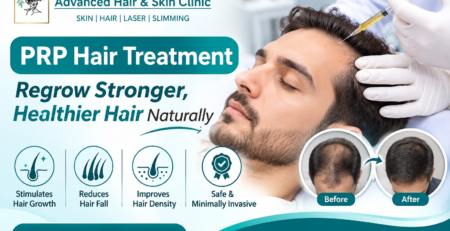
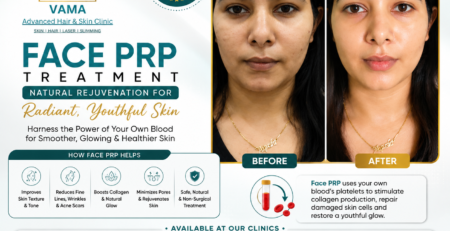
Platelet-rich plasma, or PRP, is a non-surgical therapy. A small sample of your own blood is drawn and spun in a centrifuge to separate the platelet-rich plasma, which is then micro-injected into the scalp. Platelets carry growth factors that play a role in healing and tissue repair, and the aim is to support weakened follicles and improve hair density.

PRP works on follicles that are still alive. It strengthens what you have, but it cannot create hair where follicles have been lost completely. A session takes around 30 to 45 minutes, most plans involve 4 to 6 sessions spaced about 3 to 4 weeks apart and there is little to no downtime.

How Does the Hair Transplant Procedure Work?

At VAMA Solution, we primarily use Follicular Unit Extraction. If you are researching FUE Hair Transplant in Lajpat Nagar Delhi, here is the process:

  1. Consultation: your scalp is examined, donor hair availability is checked and your goals are discussed.
  2. Donor extraction: healthy follicles are extracted one at a time using specialized instruments, with no strip of skin removed.
  3. Hairline design: a customized hairline is planned to suit your face.
  4. Implantation: each follicle is placed into the thinning area, following the natural direction and density of hair growth.
  5. Recovery: most patients return to routine within a few days.

The procedure is done under local an aesthesia as an outpatient, and it generally takes several hours depending on the number of grafts. You can expect scabbing for about 5 to 7 days, temporary shedding in the first few weeks and new growth from around 3 to 4 months. Fuller results usually show by 8 to 12 months.

How Does PRP Treatment Work?

  1. Consultation and diagnosis: your scalp and hair density are assessed to confirm that PRP suits your stage of hair loss.
  2. Blood draw: a small sample is taken from your arm.
  3. Processing: the blood is spun to concentrate the platelet-rich plasma.
  4. Injection: the plasma is micro-injected into the thinning areas.
  5. Follow-up: your progress is tracked across sessions.

Mild discomfort is normal, and most people return to their routine the same day. Many notice less shedding first, followed by finer new hairs and gradual thickening over the following months. Results vary from person to person.

Hair Transplant vs PRP: Side by Side

Type of treatment: a transplant is surgical, while PRP is non-surgical.

What it does: a transplant adds hair in areas that have lost it. PRP supports follicles that are still active.

Best for: a transplant suits stable, permanent hair loss and bald patches. PRP suits early or moderate thinning.

Time per session: a transplant takes several hours in one sitting. PRP takes about 30 to 45 minutes per session across 4 to 6 sessions.

Downtime: a transplant involves a few days of recovery and about 5 to 7 days of scabbing. PRP has none to minimal downtime.

Results timeline: a transplant shows growth from around 3 to 4 months, with full results by 8 to 12 months. PRP improves density gradually over several months and often needs maintenance.

Longevity: transplanted follicles are generally long-lasting. PRP results fade without maintenance sessions.

Cost: a transplant has a higher one-time cost that depends on the grafts needed. PRP costs less per session, but the course and maintenance add up.

Who Should Choose a Hair Transplant?

A transplant may suit you if:

  • You have bald patches or a clearly receded hairline
  • Your hair loss has been stable for some time
  • You have enough healthy donor hair
  • You want a longer-lasting option and are comfortable with a procedure
  • Medical treatment alone has not given you the coverage you want

Who Should Choose PRP?

PRP may suit you if:

  • You notice early thinning, a widening parting or increased shedding
  • You still have active but weakened follicles
  • You want a non-surgical option with minimal downtime
  • You are not ready for surgery, or surgery is not suitable for you

Can You Combine Both?

Yes, and many people do. PRP is often used alongside a transplant to support the scalp during healing and to strengthen the surrounding native hair. Someone may also start with PRP for early thinning and consider a transplant later if hair loss progresses. Your doctor can tell you what combination, if any, suits your case.

It also helps to know that medical treatment, nutritional correction and scalp care often form part of the plan. Hair loss can have causes such as thyroid problems, low iron, hormones, stress and scalp conditions, and treating the cause matters as much as the procedure you choose.

What About Women?

Women often have diffuse thinning and a widening parting instead of a receding hairline. This pattern means the donor area may also be affected, so not every woman is a candidate for a transplant. PRP and medical treatment are often the first steps, and a specialist can say whether a transplant is suitable.

How to Decide: A Simple Checklist

  1. Find out the cause: get your scalp examined and, if needed, blood tests done.
  2. Check the stage: early thinning points towards PRP and medical treatment, while established baldness may point towards a transplant.
  3. Check your donor hair: a transplant needs enough healthy donor follicles.
  4. Think about time and downtime: decide what fits your schedule.
  5. Be realistic: no treatment gives identical results for everyone.
  6. Get an honest opinion: a good clinic will tell you if you do not need a procedure.

How to Choose the Right Specialist?

Skill and honesty matter most. When you compare a Hair Transplant Doctor in Lajpat Nagar Delhi, ask:

  • Who will perform each step of my procedure?
  • How will you assess my scalp and donor area?
  • Am I a suitable candidate, and what are the alternatives?
  • How many grafts will I need, and what does the quote include?
  • What does aftercare look like, and who do I contact afterwards?

Look for a doctor who explains your diagnosis clearly, shows results on similar patients and does not push surgery on everyone.

Choosing the Right Clinic

When you shortlist a Hair Transplant Clinic in Lajpat Nagar Delhi, check for:

  • A real consultation before any plan is suggested
  • Both surgical and non-surgical options, so advice is not one-sided
  • A hygienic, sterile setup
  • A natural hairline design
  • Transparent pricing with no hidden costs
  • Clear aftercare and follow-up

Frequently Asked Questions

Is a hair transplant better than PRP? They solve different problems. A transplant restores hair in areas that have lost it, while PRP supports follicles that are still active.

Can PRP replace a hair transplant? No. PRP cannot regrow hair where follicles are lost, so advanced baldness usually needs a transplant.

Is a hair transplant permanent? Transplanted follicles are generally long-lasting, though your existing non-transplanted hair may still change with age.

How many PRP sessions will I need? Most plans involve 4 to 6 sessions, and your doctor may suggest maintenance sessions afterwards.

Which is safer? Both are generally safe when done by trained professionals in a hygienic setting. PRP is less invasive, while a transplant is a surgical procedure with its own recovery.

Final Thoughts

The question is not which treatment is better in general, but which one is better for your hair, at your stage, with your goals. For early thinning, PRP and medical treatment often come first. For stable, advanced loss, a transplant may be the most effective option. In many cases, a combination works best.

The simplest next step is a consultation. If you are looking for the Best Hair Transplant in Lajpat Nagar Delhi, book a visit to VAMA Solution. Our specialists will examine your scalp, explain your options honestly and recommend what suits you, with transparent pricing and a personalized plan.
 

Share this post